Portfolio Management
Prioritize products, projects and initiatives across the R&D pipeline.

Connect R&D strategy, project execution, resources, budgets and decisions in one integrated management layer.
ePM helps pharmaceutical organizations manage complex R&D portfolios, coordinate cross-functional projects, control investments, plan capacity and make better stage-gate decisions without duplicating the specialized work handled by Regulatory, Quality, Laboratory or Launch systems.
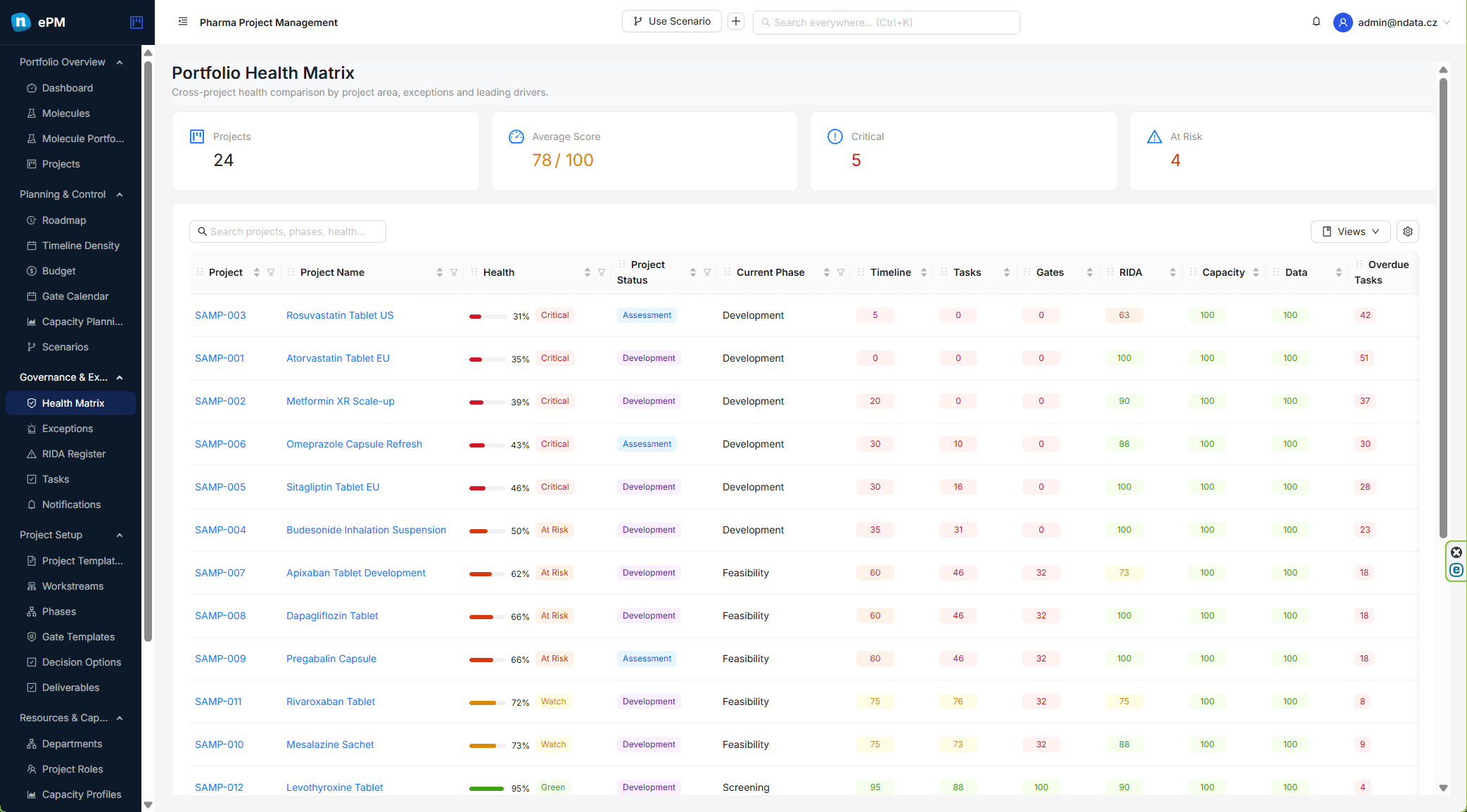
Pharmaceutical R&D involves long timelines, complex dependencies, limited expert capacity, strict governance and high investment risk. Project status is often spread across spreadsheets, meetings, emails and specialized systems, making it difficult to see what is on track, what is delayed and where management decisions are needed.
ePM brings portfolio, project, resource, budget and decision information into one structured management view.
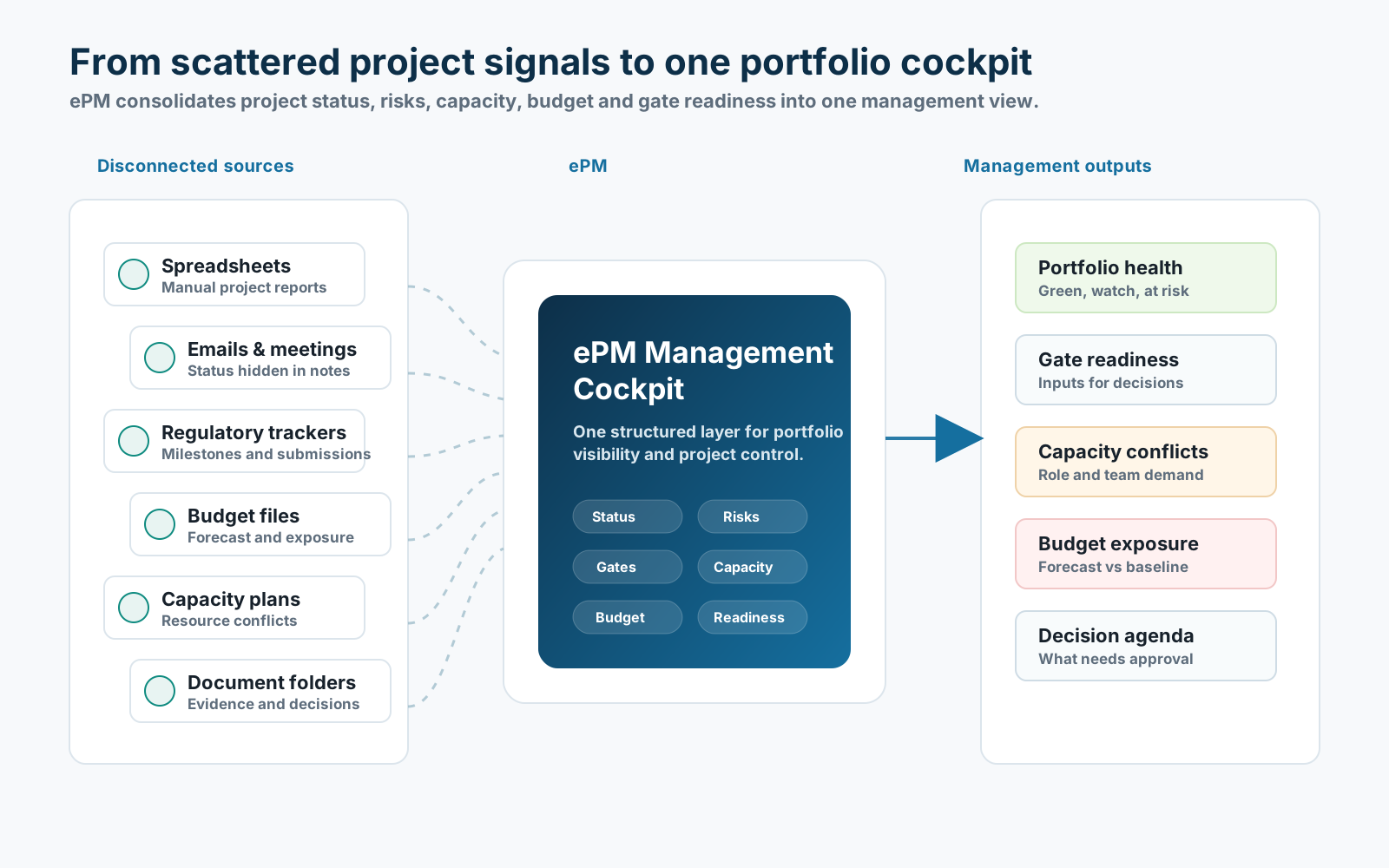
ePM brings portfolio steering, project execution and management governance into one connected layer.
Prioritize products, projects and initiatives across the R&D pipeline.
Manage phases, milestones, workstreams, dependencies and baseline vs. forecast timelines.
Define products, pack sizes, target countries and partners, then map where registration and launch activities are required.
Prepare gate reviews, track readiness, capture decisions and manage follow-up actions.
Give project managers a daily action view of blockers, overdue work, upcoming tasks and gate preparation items.
Manage workstream tasks, owners, deadlines, statuses, blockers and checklist progress from project and portfolio views.
Plan demand by department, role and time period, and identify capacity conflicts early.
Track approved budget, forecast, actuals, commitments and financial impact of changes.
Connect risks and issues directly to milestones, budgets, capacity and project health.
Model what-if changes across timelines, workstreams, capacity and budget before changing the live plan.
Collect cross-project health, timeline, gate, task, RIDA, team and budget exceptions into one action inbox.
See what must be completed before the next phase, gate, submission or launch milestone.
Standardize phases, gates, workstreams, deliverables, resource defaults and custom project fields.
Generate project summaries, gate readiness reports, risk insights and management updates.
From portfolio view to project workspace, ePM gives teams the structure needed to manage decisions, readiness and realistic delivery.
Track every product, project and initiative from a single portfolio view. Understand priorities, lifecycle phase, current health, next decision point, budget exposure, capacity conflicts and key risks without manually consolidating information from multiple sources.
Each project workspace brings together the project charter, lifecycle phase, timeline, workstreams, deliverables, resources, budget, risks, decisions and linked evidence. Teams can manage execution while leadership gets a clear view of status, blockers and impact.
ePM combines high-level project timelines with stage-gate governance. Project teams can manage phases, milestones and workstreams, while decision makers can review readiness, required inputs, open risks and gate recommendations before approving the next step.
Compare project demand with available capacity across teams, roles and time periods. Connect resource planning with budget forecasts, investment decisions and timeline impact, so management can see not only what is planned, but whether the organization can realistically deliver it.
Capture the products, strengths, dosage forms, pack configurations, partners and target countries that belong to the project. The scope matrix then shows which country and packaging combinations require registration, launch activities or both.
Break workstream activities into owned tasks with deadlines, status, priority and checklist progress. Project teams can manage the task board locally, while portfolio views surface overdue, blocked and due-soon work across projects.
Use the portfolio exceptions view to collect critical health, timeline, gate, task, RIDA, team and budget issues across projects. Each exception can carry severity, owner, due date, context and a recommended fix for management follow-up.
Create what-if scenarios for timeline shifts, workstream changes, resource demand and budget impact. Teams can review the delta against the current plan and decide whether the scenario should be applied to the baseline.
Define phases, gates, workstreams, activities, deliverables, resource demand and custom fields once, then use templates to start new projects with a consistent operating model and less manual setup.
ePM is designed to work as the portfolio and project management layer across the e-line ecosystem. Specialized systems continue to own their business domains, while ePM consumes selected milestones, statuses, risks, documents and readiness information to provide one consolidated management view.
ePM does not duplicate domain systems. It connects them.
Artwork execution follows regulatory and launch change context.
ePM is aimed at management questions that cut across projects, teams and specialized systems.
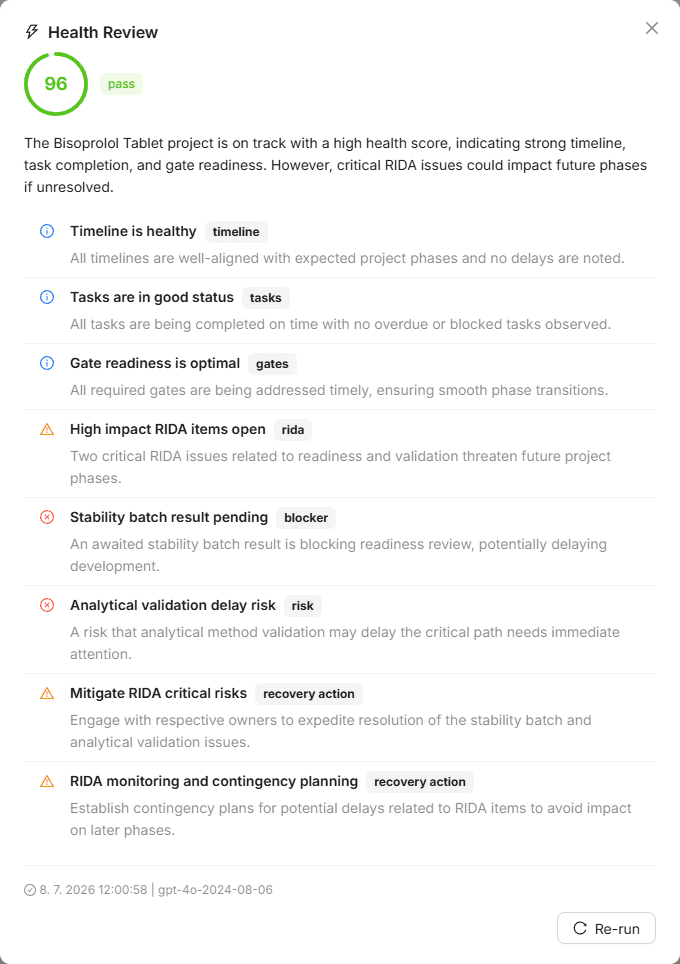
ePM Smart Actions are launched from the selected portfolio, project, gate, RIDA item or capacity view. The system assembles the relevant structured context and asks AI to perform a specific controlled task, such as checking readiness, explaining risk, summarizing status or identifying next actions.
ePM supports long project timelines, cross-functional workstreams, stage-gate decisions, regulatory milestones, resource constraints, budget control, readiness tracking and audit-friendly decision records. It is built for organizations that need more than task tracking, but do not want the complexity of heavyweight project planning tools.
See how ePM can help your teams manage pharmaceutical projects, resources, budgets, risks and decisions in one connected platform.
Request a Demo